Youtube Wendys Commercial Wheres the Beef
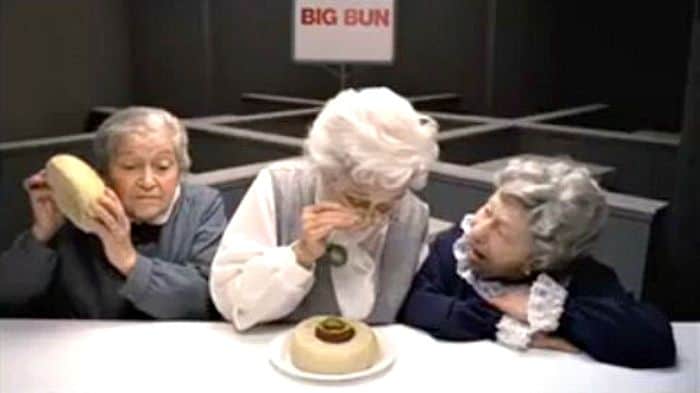
Many iconic commercials and catchphrases have existed over the years but in the 1980s 1 rose above them all.
Where'due south The Beef? Was a commercial catchphrase for Wendy'south that came out in 1984 that was used to question other fast food companies for their lack of meat. It starred unknown actress Clara Peller and was created by the groundbreaking Joe Sedelmaier, skyrocketed Wendy'southward profits, and became 1 of the most famous catchphrases of all time.
There are many iconic catchphrases from commercials that have been used over the years. Some that come up to heed include:
- Whassuuuup!
- I'm Lovin' It
- Finger-Lickin' Skillful
- They're 1000-R-R-R-reat!
- Simply Do It
- A Diamond Is Forever
Simply in the 1980s, 1 take hold of phrase seemed to rule them all – "Where's The Beef?".
If you grew up in the 80s, you lot know how iconic this catchphrase was and information technology had a huge impact on pop culture throughout the decade and beyond. It was repeated everywhere and made Clara Peller – the woman who uttered the phrase – world famous.
Where's The Beef? Continued to grow and would come to be associated with questioning things such equally ideas, events, or products every bit to if they had any substance. The story of Where's The Beef is about how catchphrases tin spread similar wildfire and information technology's as well the story of an unlikely glory and an advertising manager who changed the mode commercials are made.
This is the story of Where's The Beef?
Why Was The Where's The Beef Commercial Needed?
I love Wendy's. Outside of higher-finish burger places, I still recall it's the best of the fast food burgers. I realize it'southward commercially made food, but it just has a touch more sense of freshness to it.
Obviously, McDonald's and Burger King are the 2 main leaders of the fast nutrient burger marketplace and they were actually pushing
They wanted to showcase that their hamburger had more than beef and that McDonald's and Burger King were hiding their lack of meat by using larger buns. Wendy's wanted to telephone call them out for doing this, while at the same time showcasing that they had more beef.
So how were they going to do this?
Information technology All Starts With Joe Sedelmaier.
Sedelmaier was an art director at Immature & Rubicam and J. Walter Thompson which are big ad companies and we're talking about Madmen level of significance here. Commercials today will always feature glamorous looking people and models equally they endeavor to create an idealistic impression on people to sell their products. These days though, we go a proficient mix of that and more comedic based advertising like you encounter in a lot of Super Bowl sports. You lot're but as probable to see a regular looking person every bit you are a Kardashian in an ad.
This seems pretty normal, but this was not the example, specially in the 70s and 80s. During this time period, ALL commercials would use perfect looking people to create an image of perfection for whatever production was being sold. But film the sometime Double Mint Gum ads to get an idea of this shiny and perfect existence they were trying to portray.
Sedelmaier was the guy who changed all this, and he was the one who fundamentally changed the appearance of how commercials looked. Instead of using plastic, mannequin looking actors so that the whole ad looked like a lather opera, he would cast regular looking, and sometimes not bonny people.
Once more, this seems similar not a big deal today but this was groundbreaking through the 70s and into the 80s. He also gave commercials a looser feel instead of making them await like a glossy, moving-picture show-like production. He wanted to brand them more fun and engaging equally opposed to looking like every other commercial you lot've always seen. His commercials would include things like:
- People making strange expressions
- Sped up and boring down movements
- Exaggerated loping walks
He would land "a commercial is something you watch when you sit down to sentinel something else — yous should at least be entertained,".
It was this approach that made him a rock star in the advertising world leading him to win multiple Clio awards (like Don Draper!) and made him a highly sought after talent. Hither's an article from the New York Times from 1992 discussing his groundbreaking work being awarded for it.
Sedelmaier was the man behind the FedEx "fast-talking human being" commercials featuring John Moschitto from the iconic Micro Machines commercials and he was just what Wendy's would demand to evangelize their bulletin.
commercials
Creating The Where's The Beefiness Commercial & The DIfferent Variations
The project was put in place by Wendy'southward international vice president, William Welter who led the marketing team going into the campaign. Sedelmaeir get's a majority of the credit – equally he deserves – but he served as the manager of the commercial and other people such equally Welter were a big part of all this.
Assisting Welter was Dan Dahlen, a 35-twelvemonth advertising veteran who worked for the Wendy's advertising team from 1982 to 1986. The squad was made up of Welter, Dahlen, Bruce Ley, Cliff Freeman (from an outside advertising agency) and Sedelmaier.
They wanted to showcase that the other fast-food places were hiding the meat by the size of their bun and they wanted to use regular people in the advert that Sedelmaier had made and then constructive. It started out every bit a commercial featuring a young couple, they were regular looking people – non models per se – but the ad was only seen every bit not funny.
For the next versions of the advert, Freeman came upwardly with the storyboard for two dissimilar versions of the commercial after they ditched the young couple.
The one version featured a trio of anile men with one of them, an elderly baldheaded homo, saying "Thank you, but where'southward the beef?" It didn't seem to connect very well, but they had some other version that they had filmed with iii older ladies including one named Clara Peller that Freeman had discovered.
Before continuing with the process of the commercial let'due south have a quick wait at the iconic Clara Peller
Who Was Clara Peller?
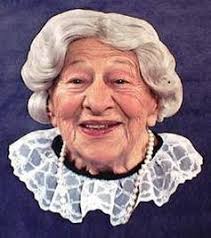
Peller, who was born in 1902 was a manicurist and became a character actor merely had spent 35 years working for a beauty salon in Chicago. A commercial being filmed in Chicago needed to be set in a barbershop and needed a manicurist and took a whim on casting the 80-yr-old Pellar to play the role.
The agency doing the commercial loved her no-nonsense manners and unique voice and idea they would be able to brand use of her and signed her to an bureau contract. Peller and then started to be used in a agglomeration of different TV ads even though her difficulty hearing, and ability to only recite short lines of dialogue, limited what she could do on camera. One of her first large parts was that of a comical cleaning lady used in the Massachusets state lottery game called "Megabucks".
All of these ads caught the centre of Freeman and she was bandage in the Wendy's commercial and she would be instrumental in the success of the commercial, of Wendy's, and one of the biggest catchphrases ever created. In that location would exist some issues surrounding how she would be compensated but we'll become back to that in a minute.
Getting The Commercial On The Air
And then there were two versions of the commercial now ready and it was taken to the ad committee which was made up of six executives and ten franchisees. It was rejected. Some concerns were that customer surveys done by Wendy's showed that the people weren't all that concerned well-nigh the size of the patties. The advert committee besides thought that the version with Peller was a piddling too precipitous due to her louder and harsher fashion of speaking.
They reworked some stuff and the second versions of the commercials got the thumbs upward. Many probably don't remember this but the version with the trio of men actually aired alongside the version with Pellar. They were both launched in January 1984.
But it didn't have long and the version with Peller snowballed making them dump the version with the one-time men and focusing on the trio of older ladies. The ad was simply intended to run for a short while but the explosion in popularity allowed information technology to run for 10 weeks.
The Massive Affect Of The Where's The Beef Commercial
Advertizing is tough today. In that location are so many things vying for our attention that advertisers don't know where to even be in club to get the most optics on their products. There are so many Idiot box and cable stations, along with specialty channels that people are always cycling through. There are now 5 significant streaming services that get a lot of peoples attention and it's hard to narrow down where your audience is. Exercise yous stay on terrestrial TV? Annunciate on YouTube? In that location' are a lot of decisions to exist made.
In the 80s, with pretty much merely three networks, it was much easier to get your bulletin across to a vast bulk of the viewing public. There was and then little else vying for peoples that annihilation that was seen on network television could accident up by the next solar day. Entire careers could exist fabricated past one skilful musical performance, or stand comedy prepare. You could be an unknown comic, take a adept assault Johnny Carson, and the adjacent day you were a household name.
This was the case with the Where'south The Beefiness commercial. Anybody saw it, and everyone bought into it embracing the uniqueness of the ad and of Peller's delivery of three words. Information technology caught on and so fast that it became a cultural miracle and made Peller somewhat of a cult star.
This paid off big time for Wendy's equally every Wendy'southward restaurant was doing at least 10% more sales in 1984 than they were in 1983 and overall sales jumped by 31% to $945 1000000 worldwide by 1985.
The Cultural Bear upon Of Where'due south The Beef
Then nosotros've talked about how in the 80s if a commercial made a big splash chances are anybody was talking about. Where's the beef would be mentioned on late night talk shows and fifty-fifty turned into a song. A Nashville songwriter named Coyote McCloud recorded and performed his version of Where's The Beef and it was a pretty big hit.
Where'southward the beef and so crept its way into the 1984 presidential election.
During the primaries of the bound of 1984 democratic candidate and quondam vice-president Walter Mondale used the phrase, to sum up that the program policies put forrard by opponent Gary Hart were lacking in substance. This was at the height of the popularity of the commercial and so it was a great way to tap into the public consciousness by using a topical phrase that also was a pretty cutting jab.
This all happened during a televised argue just before the New York and Pennsylvania primaries. Hart was seen as being in a like mold to John F Kennedy especially in appearance and his platform was based on the concept of "new ideas". He had gone from a dark horse to more than of a threat and he kept pushing the new ideas viewpoint in all his debates. Mondale seemed similar he was waiting for this and after Hart repeated it during the debate Mondale leans over and says:
"When I heard your new ideas, I'm reminded of that ad , 'Where'due south the beef'?".
This seems crazy merely Mondale's employ of Where'southward the beef? Would end up earning the Democratic nomination. The two sides were both using their slogans which made Hart have to physically show his policy papers and tell him, "hither's the beef". Mondale kept pushing virtually Where's the beef when it came to Hart's policies that the public started seeing it the same way and information technology cast doubt on Hart's new ideas.
The Fall Out Between Wendy's & Clara Peller
You remember with such a monster commercial that Wendy'southward would have driven it into the ground but they actually backed off and pulled the commercial. They also didn't make countless new versions of information technology because they didn't desire Peller to get overexposed.
They still wanted to employ Peller and capitalize on the popularity of both she, and the catchphrase so they offered her a three-year contract to be an ambassador For Wendy'due south. This would involve her to appear at new openings and any big events alongside Wendy's founder Dave Thomas.
Peller was obviously a hot commodity and appeared on Saturday Night Live, Television appearances, and all kinds of interviews. She appeared in the low-budget 1985 motion-picture show "Moving Violations", and she was the guest timekeeper at WrestleMania 2 at the boxing royal held in Chicago'south Rosemont Horizon.
The thing is it seemed she didn't make that much money from the actual commercial.
For the initial Idiot box spot, Peller made the standard day wage for an actor of $317.40. When she started doing the promotional work Peller said that she was paid $30,000 for the first ii commercials she did plus profits from the product tie-ins. Wendy'southward said that they had paid here almost $500,000 for all the work she did with them, a number that Peller had denied.
Things fall apart when Peller concluded up making a commercial for
This commercial came out in 1985 and Peller stating that "she constitute it" – referring to the beef – was enough for Wendys to believe that she had violated her contract. According to them, it implied "that Clara found the beefiness at somewhere other than a Wendy's restaurant." Wendy'due south canceled her contract and when announcing this dismissal Wendy's stated that,
"Clara tin can discover the beef only in one place, and that is Wendy'due south " .
Ouch.
Peller points out that she had made Wendy'south millions and millions of dollars and that she was not appreciated by them which is difficult not to agree with – but I guess Dave Thomas has real "f**K you money".
The Legacy Of Clara Peller & Where'due south The Beefiness
Following all of this, Wendy'southward would enter into a big two-year sales slump. I'one thousand not certain if people became aware of how Wendy's had treated her or if it was more near Where's the beefiness just being a passing fad. I'm more probable to recollect it was the latter as catchphrases tin can come up and go and it tends to be more near the catchphrase than the make itself.
Wendy's said information technology would have 5 years until they recovered and were able to create brand sensation again. This time information technology was due to those atrocious commercials featuring Dave Thomas. I idea they sucked, but they conspicuously did the fox.
Peller would sadly laissez passer away in August of 1987 simply she left behind a pretty astonishing legacy. She was THE catchphrase of the 1980s and part of ane of the most iconic lines, and ads, of all time. I think Wendy's owes her a lot and Where'due south the beef still pops up till this twenty-four hour period.
Source: https://www.everything80spodcast.com/wheres-the-beef/
0 Response to "Youtube Wendys Commercial Wheres the Beef"
Post a Comment